↗ From AI Pass to Production-Grade Security: A Founder’s Playbook From the Lorikeet–Flowtriq Gap
Ever shipped features after an AI code audit and still felt that gnawing “what did we miss in prod?” feeling? In my 15 years working with high-velocity teams, I’ve seen AI close obvious code-level flaws—then runtime, infrastructure, and edge-case risks bite you in postmortem. The Lorikeet–Flowtriq case study is a Strategic Guide to fix that. While Flowtriq excels at instant DDoS detection and mitigation to keep you online, the Lorikeet approach shows how to convert an “AI clean bill of health” into real-world assurance. And the Lorikeet Security PTaaS model turns that insight into an execution playbook.
↗ Step 1: Stand Up Your PTaaS Account and Scope Like a Pro
Treat this as Direction Setting for your security program.
- →Create your org in the Lorikeet Security portal and add assets: app domains, APIs, mobile builds, and cloud accounts.
- →Choose testing types that mirror your stack: web app/API, network, mobile, and cloud. Map them to compliance needs (SOC 2, HIPAA, PCI-DSS, HITRUST, FedRAMP).
- →Define scope with production reality in mind: reverse proxies, CDNs, WAFs, OAuth/SSO, background workers, file storage, and third-party integrations.
- →Set test windows and guardrails (rate limits, data handling). Verify your safe lists and TLS termination points.
- →Invite engineering, DevOps, and your security lead. Agree on severity thresholds and remediation SLAs up front.
- →If you need governance or monitoring muscle, enable vCISO and SOC-as-a-Service to keep findings from dying on the vine.
↗ Step 2: Core Features You Need to Know
Use the case study as a Founder Resource and then execute with these features:
- →Manual, runtime-first pentesting: After Flowtriq’s AI pass removed XSS/SQLi/template injection/weak crypto, manual tests still found session edge cases, TLS posture issues, file-system hygiene gaps, and reverse-proxy header misconfigurations—the exact places AI can’t see.
- →Attack Surface Management (ASM): Continuously track new subdomains, exposed services, or cloud drift that reopens risk between releases.
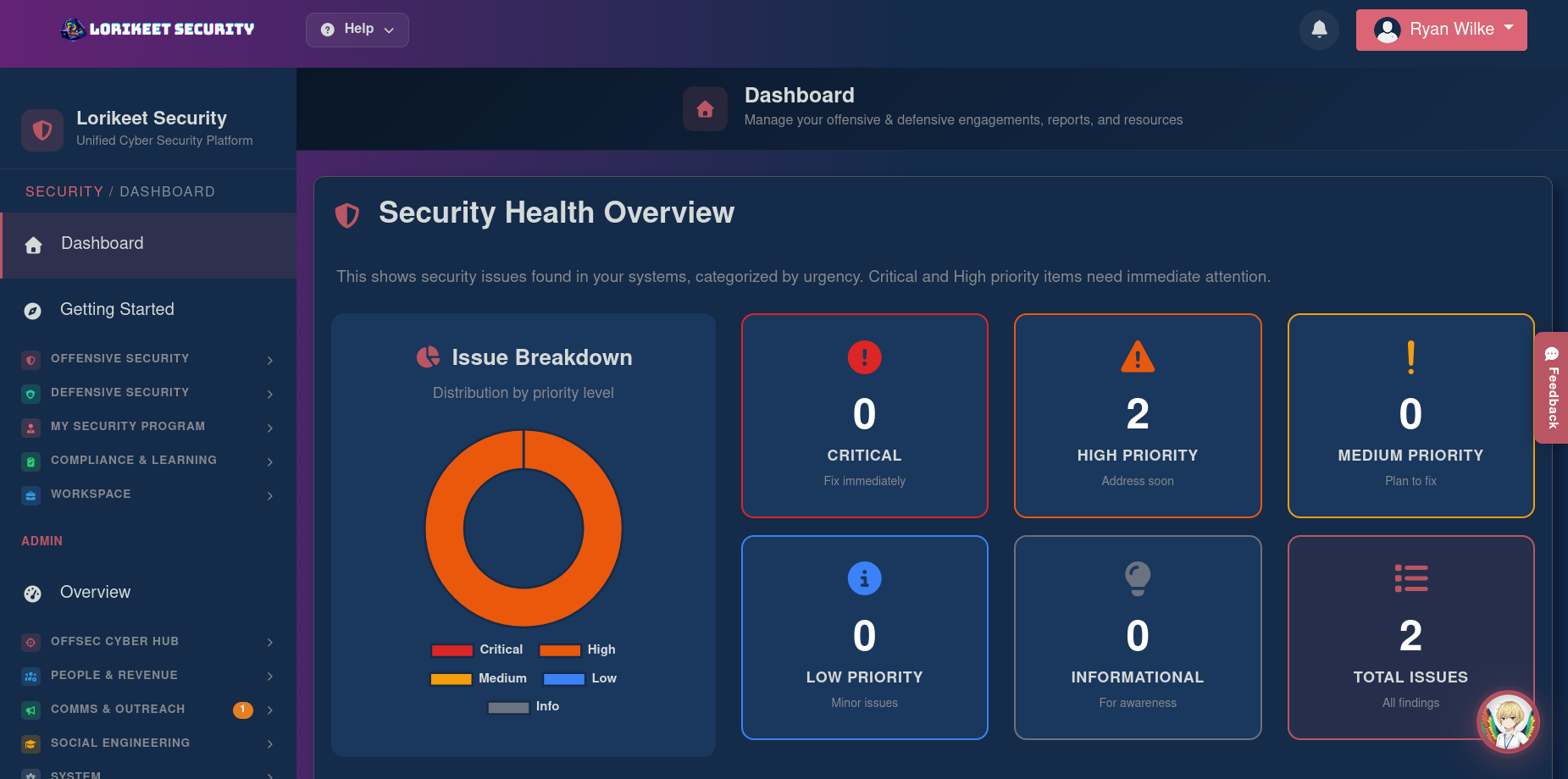
- →PTaaS portal with live findings: See reproducible proof, evidence, and impact in real time. Use integrated reporting for auditors and the board.
- →Real-time chat with testers: Cut cycle time by clarifying assumptions, reproducing issues, and validating fixes instantly.
- →Compliance-aligned testing: Tie findings to controls you actually need for SOC 2, HIPAA, PCI, or FedRAMP, turning pentest output into audit-ready artifacts.
Practical example: Reproduce the session bugs highlighted in the case study by testing token refresh/expiry, Secure/HttpOnly/SameSite flags, SSO logout paths, and header injection through your reverse proxy chain.
↗ Step 3: Pro Tips for Startup Teams Shipping Fast
This is your Growth Vector: harden what AI can’t see.
- →Run the “AI-first, human-final” pattern: Have Claude/Cursor/Copilot fix obvious source flaws, then schedule a manual pentest to hit runtime and infra.
- →Pre-scope checklist: enumerate TLS termination points; enforce HSTS; validate X-Forwarded-Proto/Host handling; make container filesystems read-only and scrub temp dirs.
- →Treat session logic as a threat model: rotate tokens, test concurrent logins, and verify logout propagation across services.
- →Make ASM your release gate: any new subdomain, API, or cloud service requires a mini-assessment before public exposure.
- →Close the loop fast: use live chat to confirm remediation and request targeted re-tests; update runbooks so fixes persist across teams.
↗ Common Mistakes to Avoid
- →Believing an AI audit equals “secure in prod”: As shown in the case study, residual risk lives in runtime, infrastructure, and config. Plan for both.
- →Under-scoping assets: If your proxy/CDN/WAF, background jobs, or third-party auth aren’t in scope, your risk picture is fiction.
- →Treating pentests as a checkbox: Without remediation, re-testing, and governance (vCISO/SOC), findings won’t become durable improvements.
↗ How It Compares to Alternatives
- →Flowtriq vs Lorikeet approach: While Flowtriq excels at auto-mitigating DDoS within seconds—crucial for uptime and revenue protection—DDoS tooling won’t uncover session bugs, TLS misconfig, or reverse-proxy header issues. Pricing typically skews usage/traffic-based and is quick to value; manual pentests are project/engagement-based and deliver deeper assurance.
- →Lorikeet Security platform vs “just the case study”: The case study is your playbook for Direction Setting; the platform is how you operationalize it—PTaaS portal, ASM, vCISO, and SOC services to sustain outcomes.
- →Toolchain context: SAST/DAST tools (think Snyk, Burp, ZAP) are valuable, but they complement—not replace—manual, context-rich testing across sessions, TLS, and infra.
↗ Conclusion: Is Lorikeet Security Case Study Right for You?
If you’re AI-native, shipping fast, or chasing SOC 2/HIPAA/PCI, the Lorikeet–Flowtriq narrative is the Strategic Guide you need: let AI close source-level bugs, then use Lorikeet Security to kill the runtime and infra risks that actually cause incidents. For founders, that’s Direction Setting you can defend to customers, auditors, and your board—and a Growth Vector that compounds with every release. My recommendation: adopt the two-phase model this quarter and make the case study your onboarding playbook for security that holds up in production.
EXTERNAL VECTOR
VISIT LORIKEET SECURITY CASE STUDY ↗